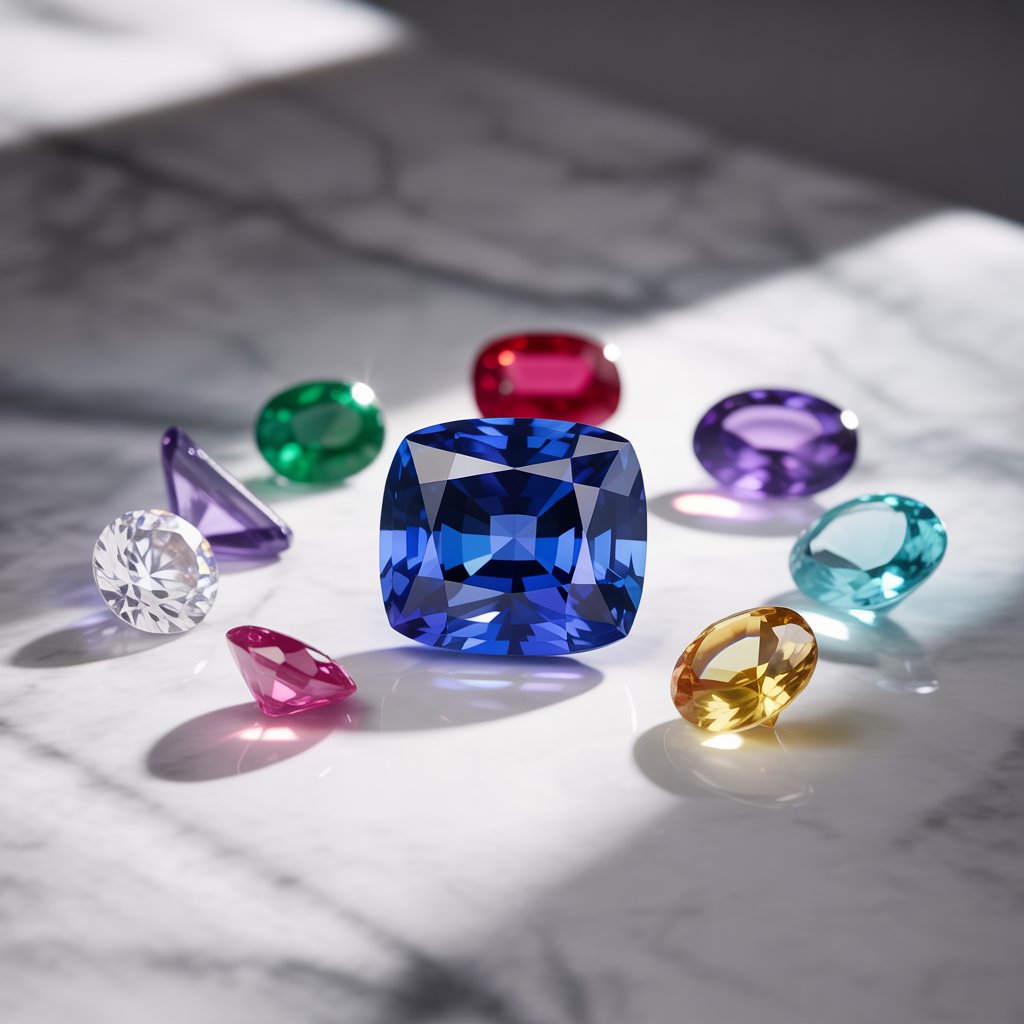
The Eternal Allure of Gemstones
Since the dawn of civilization, gemstones have captivated humanity with their mesmerizing beauty, rarity, and mystical properties. From the crown jewels of monarchs to the engagement rings of everyday couples, these natural treasures continue to play a significant role in our lives—symbolizing love, power, status, and spiritual connection.
Whether you’re a curious beginner exploring the world of precious stones, a collector seeking investment opportunities, or someone interested in the healing properties of crystals, this comprehensive guide will illuminate everything you need to know about gemstones in 2025.
What Are Gemstones? Understanding the Basics
Definition and Formation
Gemstones are naturally occurring minerals or organic materials that, when cut and polished, are used in jewelry and decorative objects. These remarkable materials form through various geological processes:
Igneous Formation:
- Crystals form from cooling magma or lava
- Examples: diamonds, peridot, topaz
- Process takes millions of years
- Occurs deep within Earth’s crust
Metamorphic Formation:
- Existing rocks transform under heat and pressure
- Examples: ruby, sapphire, emerald
- Creates some of the hardest gemstones
- Results in exceptional clarity and color
Sedimentary Formation:
- Minerals deposit in layers over time
- Examples: opal, malachite, turquoise
- Often contain unique patterns
- Secondary mineral formation
Organic Formation:
- Created by living organisms
- Examples: pearl, amber, coral, jet
- Unique among gemstones
- Require special care
What Makes a Gemstone Valuable?
The Four Cs of Gemstone Quality:
- Color – The most important factor for colored stones
- Hue (the basic color)
- Saturation (intensity of color)
- Tone (lightness or darkness)
- Clarity – Presence or absence of inclusions
- Eye-clean stones command premium
- Some inclusions add character
- Varies by gemstone type
- Cut – How well the stone is shaped and faceted
- Maximizes brilliance and color
- Proper proportions essential
- Skilled cutting enhances value
- Carat Weight – Size and weight of the stone
- Larger stones generally more valuable
- Quality should never be sacrificed for size
- Rarity increases with size for some gems
Additional Value Factors:
- Origin and provenance
- Treatment and enhancement status
- Rarity and demand
- Historical significance
- Market trends
Precious vs. Semi-Precious Gemstones: The Classification
The Traditional Precious Four
Historically, only four gemstones were classified as “precious”:
1. Diamond
Chemical Composition: Pure carbon (C) Hardness: 10 (Mohs scale) Colors: Colorless, yellow, brown, blue, pink, green, red
Why It’s Precious:
- Hardest natural substance on Earth
- Exceptional brilliance and fire
- Symbol of eternal love and commitment
- Significant industrial applications
- High market demand and value
Famous Examples:
- Hope Diamond (45.52 carats)
- Cullinan Diamond (3,106 carats rough)
- Koh-i-Noor Diamond (105.6 carats)
Investment Value: Diamonds consistently hold value, especially rare colored diamonds and stones over 2 carats with excellent clarity.
2. Ruby
Chemical Composition: Aluminum oxide with chromium (Al₂O₃:Cr) Hardness: 9 (Mohs scale) Colors: Red (from pink-red to deep blood red)
Why It’s Precious:
- Second hardest natural gemstone
- Vivid red color from chromium
- Symbol of passion and power
- Rarer than diamonds in fine quality
- Exceptional durability
Top Sources:
- Myanmar (Burma) – “Pigeon’s blood” rubies
- Mozambique – Vibrant red with purplish hue
- Thailand – Darker, brownish-red tones
- Madagascar, Sri Lanka
Record Prices: Top-quality Burmese rubies can exceed $1 million per carat.
3. Sapphire
Chemical Composition: Aluminum oxide with iron and titanium (Al₂O₃) Hardness: 9 (Mohs scale) Colors: Blue, pink, yellow, green, orange, purple, white
Why It’s Precious:
- Same hardness as ruby (both are corundum)
- Royal blue color highly prized
- Exceptional durability for daily wear
- Associated with royalty and wisdom
- Available in rainbow of colors
Famous Varieties:
- Kashmir sapphire (velvety blue, most valuable)
- Ceylon sapphire (Sri Lankan, bright blue)
- Padparadscha (rare pink-orange)
- Star sapphire (asterism effect)
Royal Connection: Princess Diana’s sapphire engagement ring, now worn by Kate Middleton.
4. Emerald
Chemical Composition: Beryllium aluminum silicate with chromium/vanadium (Be₃Al₂(SiO₃)₆) Hardness: 7.5-8 (Mohs scale) Colors: Green (from yellowish to bluish green)
Why It’s Precious:
- Vivid green color unmatched in nature
- Extreme rarity in fine quality
- Historical significance across cultures
- Symbol of rebirth and love
- Associated with royalty and wealth
Top Sources:
- Colombia – Finest quality, pure green
- Zambia – Bluish-green, excellent clarity
- Brazil – Lighter, yellowish-green
- Afghanistan, Zimbabwe
Unique Characteristic: Almost all emeralds have visible inclusions (called “jardin” or garden), which are accepted as part of their character.